
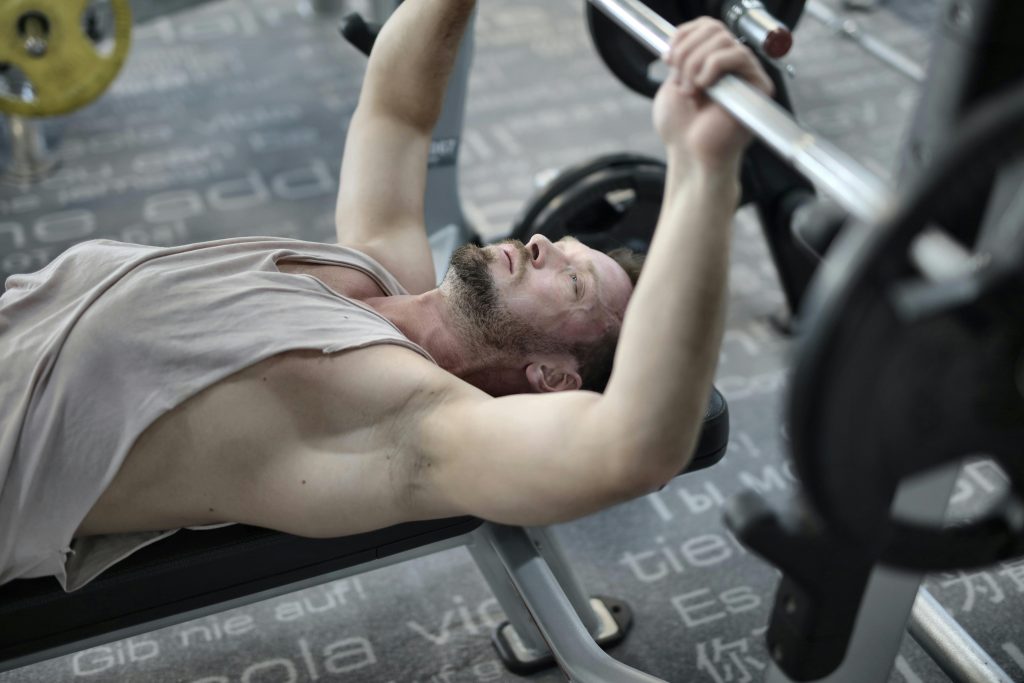
What is RPE?
RPE or Rate of Perceived Exertion is a way of measuring how difficult a set feels. RPE is measured on a scale of 1-10 with 1 being very easy and 10 being where you have reached absolute failure. For example if you have an RPE of 9 that would be mean that you feel like you have roughly 1 rep left in the tank before you have lifted to failure. It is a very useful tool and can you help you train safely and effectively. The concept of RPE originated from Gunnar Borg who created the Borg Scale to measure perceived effort during aerobic exercise. Decades later this was adapted by Mike Tuchscherer for strength training.
Below is a short table which shows the RPE scale and the number of reps you would have left for each RPE:
| RPE | Description | Reps Left |
|---|---|---|
| 10 | Max effort — no reps left | 0 |
| 9 | Could have done 1 more | 1 |
| 8 | Could have done 2 more | 2 |
| 7 | Could have done 3 more | 3 |
| 6.5 | Very easy — warm-up range | 4+ |
Importance of RPE training
So why does RPE matter? Well the main purpose of RPE is no person ever feels 100% in the gym every single time they have a gym session. Their are going to be those days where you feel off, this may be because of stress, sleep, not getting enough nutrition or even overtraining and not getting enough recovery. This is where RPE becomes really important because on these days that you are not at your 100% you are not going to be able to follow your program like normal and you need to listen to your body. Instead of just forcing yourself to lift and meet your targeted weight and reps for the day, RPE will allow you to autoregulate and train based on the performance of that specific day. By doing this you will prevent yourself from burning out, hitting a plateau and you will be able to remain stronger and make more consistent progress for longer.
How to Accurately Rate you RPE
Learning to to provide accurate estimate for your RPE takes time but comes with practice. Here are some ways which can you help you provide more accurate estimates:
Review Lifts
Regularly record your lifts, doing this is one of the best ways to improve. Your perception while lifting is very different to what it actually looks like. By watching videos of yourself you can pay better attention to things like the quality of form and bar speed which can help you get better idea of how clean the lift actually looked like. When recording your sets try keep the camera angle consistent each week to compare your lifts over time.
AMRAP sets
Once in a while, maybe once every few training cycles (8-12 weeks) it is worth doing some AMRAP sets (As Many Reps As Possible) or testing your 1 rep max occasionally. By doing this it gives you a better idea of where an RPE 10 feels like and can help make you provide better estimates.
How do I train using RPE?
First before you plan on using RPE in your training you need to understand that RPE is not something to really worry about as a beginner lifter. The main reason for this is being a beginner you will have very little experience lifting at maximal effort so would not really be able to give reliable RPE estimates for each lift. At this stage it is best to just aim to lift without form breaking down.
Research by Barbosa-Netto et al. (2021) found that majority of lifters give inaccurate judgements of how close they can lift to failure when choosing their own training loads. In the Study subjects were asked to perform 10 reps with a weight they can normally perform 10 reps of bench press with. On average they were able to complete 16 or more reps. This shows that most regular gym were training much further than failure than they thought. With their RPE being significantly lower than what they would have estimated. For this reason beginners should just aim to lift without form breaking down and work more using percentage based loads.
If you are an intermediate or advanced lifter below are some ways in which you can use RPE to train effectively:
- Adjusting top sets and back of sets based on how you feel ( e.g., 1 top set at RPE 9 then 3 backoff sets @ -10% load)
- Using RPE on your accessories to manage fatigue
- Setting Weekly Progression (e.g, one week you managed your set with RPE 8 next week you either add one more rep or you manage the set with a lower RPE)
Common mistakes when using RPE
Misunderstanding the scale and what each number means
One of the main problems that arise with RPE training is not understanding what RPE actually means. Lots of lifters just see it as how difficult it feels, but it is more than this. The question you should be asking yourself is not how hard it feels but how many reps could you have realistically managed?
Overestimating and underestimating your RPE
This is a similar to misunderstanding the RPE scale. Many lifters will not give strong and reliable estimates of their RPE, they will either underestimate or overestimate their efforts. Underestimating is where you think you did RPE 8 when you actually did RPE 7. This means that you stopped for to early before failure and this may result in less progress as you might not be pushing yourself. Overestimating is the opposite where you thought you did RPE 8 but it was an actually RPE 10 for example. This will lead to burn out and overtraining.
RPE is subjective and individual.
What you have to understand when estimating RPE is it is subjective and is different for everyone what feels like an RPE of 9 to you might be RPE of 8 to someone else. Therefore it should be used as more of a personal tool.
References:
- Barbosa-Netto S, d’Acelino-E-Porto OS, Almeida MB. Self-Selected Resistance Exercise Load: Implications for Research and Prescription. J Strength Cond Res. 2021 Feb 1;35(Suppl 1):S166-S172. doi: 10.1519/JSC.0000000000002287. PMID: 29112055.